
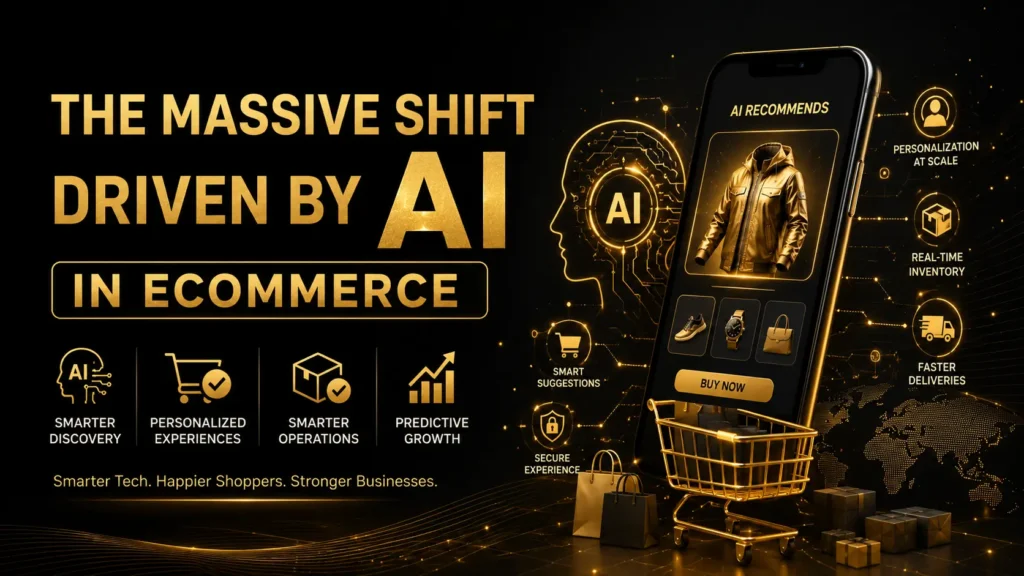
Are you still waiting days for custom product matches? Brands use smart tools to change online shopping forever. This technology helps buyers find items fast.
The year 2026 brings huge shifts to digital retail markets. Algorithms now predict what you want to buy next. Machine learning changes how web stores operate daily.
The use of AI in eCommerce helps businesses grow fast. These system tools learn from daily shopper habits. Computers study what people view on retail sites.
Dynamic Growth and eCommerce trends 2026
Retail tech shifts fast as new tools arrive. Brands must adapt now to stay ahead online. Smart systems handle complex store tasks with ease.
Data tools look at what you view online. They show products you might need right away. This smart method improves your digital shopping path.
Stores change their layout based on your clicks. Every shopper sees a unique store page now. This smart tech makes shopping fun and fast.
Smart Operations and AI tools for eCommerce
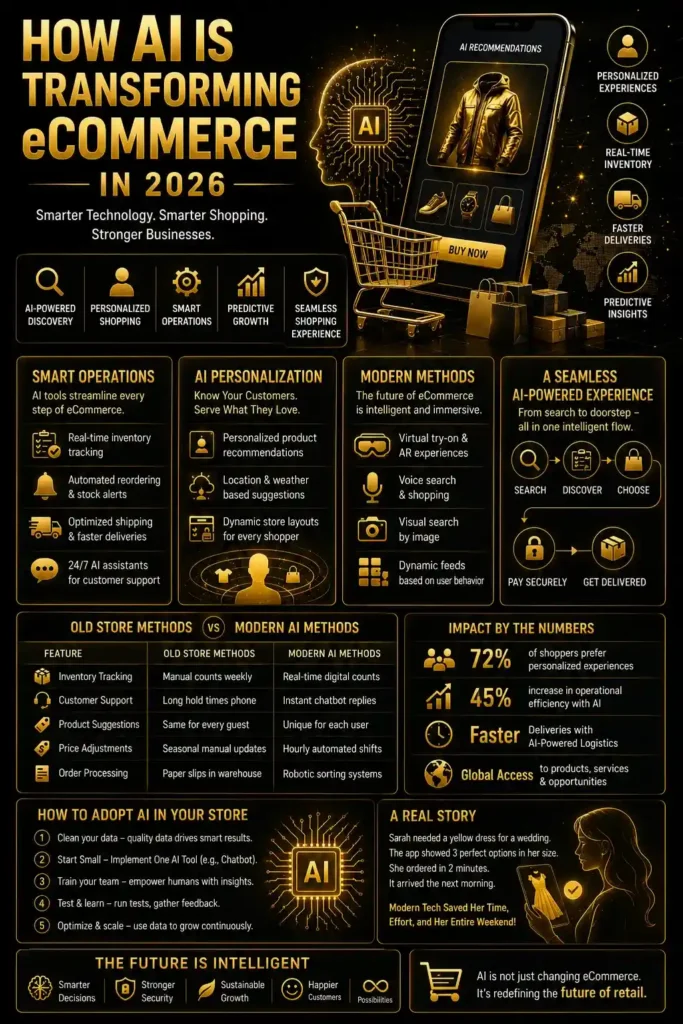
Automation shifts how shops track their current stock. Systems count items and reorder goods automatically. This rule prevents stores from running out of items.
Computers track items from warehouses to your doorstep. Shipping systems choose the fastest routes for trucks. Delivery times drop because of these smart paths.
Retail workers save hours by using these modern systems. Teams focus on big creative tasks instead. Tech handles the hard data work every day.
- Predictive systems track supply levels in real time.
- Smart software alerts teams when stock gets low.
- Automated tools update product listings across major platforms.
- Digital assistants answer basic customer questions around the clock.
The Power of AI personalization in online shopping
Shops know your taste before you type anything. Systems study choices to offer perfect product matches. This custom touch helps you save massive time.
Algorithms look at the weather near your home. They show warm coats if cold winds blow nearby. This logic makes retail feel very personal today.
Web pages update instantly as you browse them. You see colors and styles that fit your taste. Modern stores feel like custom shops built for you.
Modern Methods and the future of eCommerce with AI
Retail models move toward total automation very quickly. Stores predict future demands months before they happen. This vision guides how brands make new items.
Virtual spaces let you test products from home. You see how furniture looks in your room. This cool tech removes guesswork from online buying.
Voice tools let you order goods using speech. You talk to your phone to buy food. Shopping happens while you do other house chores.
- Virtual assistants guide you through complex product options.
- Smart fit tools suggest correct clothing sizes instantly.
- Visual search options let you upload item photos.
- Dynamic feeds show items based on past clicks.
A Seamless and AI-powered shopping experience
Imagine searching for a blue jacket online. The search engine thinks about your exact style. You get options that match your budget perfectly.
The platform shows shoes that match that jacket well. You do not waste hours browsing through endless pages. This smooth system makes buying things effortless.
Every step feels natural as you navigate the store. Checkout takes one click because data stays secure. Tech creates a smooth path from search to delivery.
Advanced Strategies from Industry Giants
Amazon uses smart code to change retail rules. Their systems guess what you need this week. They ship items to local hubs before you buy.
This proactive method cuts down delivery times by days. Their servers study millions of buyer habits at once. Huge data sets train these retail tools daily.
Flipkart uses deep tech to help regional buyers. Their systems translate text into many local languages. This approach brings digital retail to millions more.
Their visual search tool helps people find items fast. You snap a photo to locate matching goods. Local shoppers find what they need with ease.
| Feature | Old Store Methods | Modern AI Methods |
| Inventory Tracking | Manual counts weekly | Real time digital counts |
| Customer Support | Long hold times phone | Instant chatbot replies |
| Product Suggestions | Same for every guest | Unique for each user |
| Price Adjustments | Seasonal manual updates | Hourly automated shifts |
| Order Processing | Paper slips in warehouse | Robotic sorting systems |
How to Adopt Smart Retail Techniques Today
Shops must clean their data before adding tools. Good data feeds the algorithms what they need. Clean records lead to better system choices later.
Pick one simple tool to start your shift. A basic chatbot can assist your buyers first. Monitor results before you add more complex tools.
Train your team to use these new systems. Employees must know how to read data reports. Human oversight keeps automated systems on track always.
Test different tools on small groups of users. See how buyers react to custom product lists. Use feedback to make your system work better.
- Connect your current site to smart data plugs.
- Clean your product tags so systems read them.
- Monitor how fast your new chatbot solves problems.
- Adjust your strategy based on monthly user data.
A Real Story of Retail Shift
Meet a busy shopper named Sarah from Austin. Sarah needs a yellow dress for a summer wedding. She opens her favorite store app on her phone.
The app shows three yellow dresses in her size. The system knows her size from past shoe orders. Sarah picks the top dress option within two minutes.
The dress arrives at her home the next morning. Sarah avoids driving to three different local malls. Modern store tech saves her Saturday afternoon completely.
New Rules for the Digital Market Era
Smart algorithms change how brands set item prices. Prices shift based on current buyer demand levels. This system keeps store prices fair and competitive.
The tech tracks when people buy items most. It lowers prices when sales slow down drastically. You get better deals without searching for coupons.
Over 72% of digital shoppers prefer custom store pages. This high number shows what buyers want today. Brands must adapt to these clear buyer desires.
Research shows a 45% jump in store efficiency. Automated warehouses pack boxes much faster than before. Machines do the heavy lifting for modern brands.
The Global Impact of Automated Commerce
Global supply chains run smoother because of tech. Systems connect factories directly to store digital shelves. This link reduces waste across the whole world.
Stores produce only what people actually want to buy. This smart planning helps reduce excess factory waste. Green goals become easier to reach with data.
Smaller brands can compete with giant web stores now. Cheap cloud tools give small shops massive data power. The digital playground becomes fair for everyone today.
New startups launch with automated tools built inside. These lean teams move faster than old retail firms. Innovation happens at a very rapid pace now.
The global marketplace becomes open to every single region. Translation tools break down old language barriers completely. You buy from distant creators with total confidence.
Security tools watch for fraud during every sale. Systems spot weird buying patterns in one millisecond. Your banking details stay safe from digital thieves.
Smart tech stops fake reviews from tricking buyers. Systems verify if a user actually bought items. You read honest opinions when you browse stores.
A Bright Vision for Online Merchants
Retail shifts toward a fully automated digital realm. Brands that use AI in eCommerce win long term. The tech creates a fast path for growth.
Every store becomes an intuitive assistant for the user. Shopping becomes a smooth conversation between human and machine. This evolution redefines how the world buys goods.
Frequently Asked Questions

Content writer at DigivaarTech. Passionate about SEO, digital marketing, and helping businesses grow online through high-quality content.